Adventures
Half-day to full-day trips that we recommend
While there are enough nearby attractions to fill a week at Caballitos del Mar, you may want to explore a little farther, and see a little bit more of the country. If so, these half- to full-day trips are ideal. Some of them are on a drop-in basis with no planning necessary, while others benefit from some pre-planning, and possibly reservations. Some are based on a particular destination, while others are driving tours of the southern half of the country. Take your time, enjoy the vistas, and have fun
Manuel Antonio
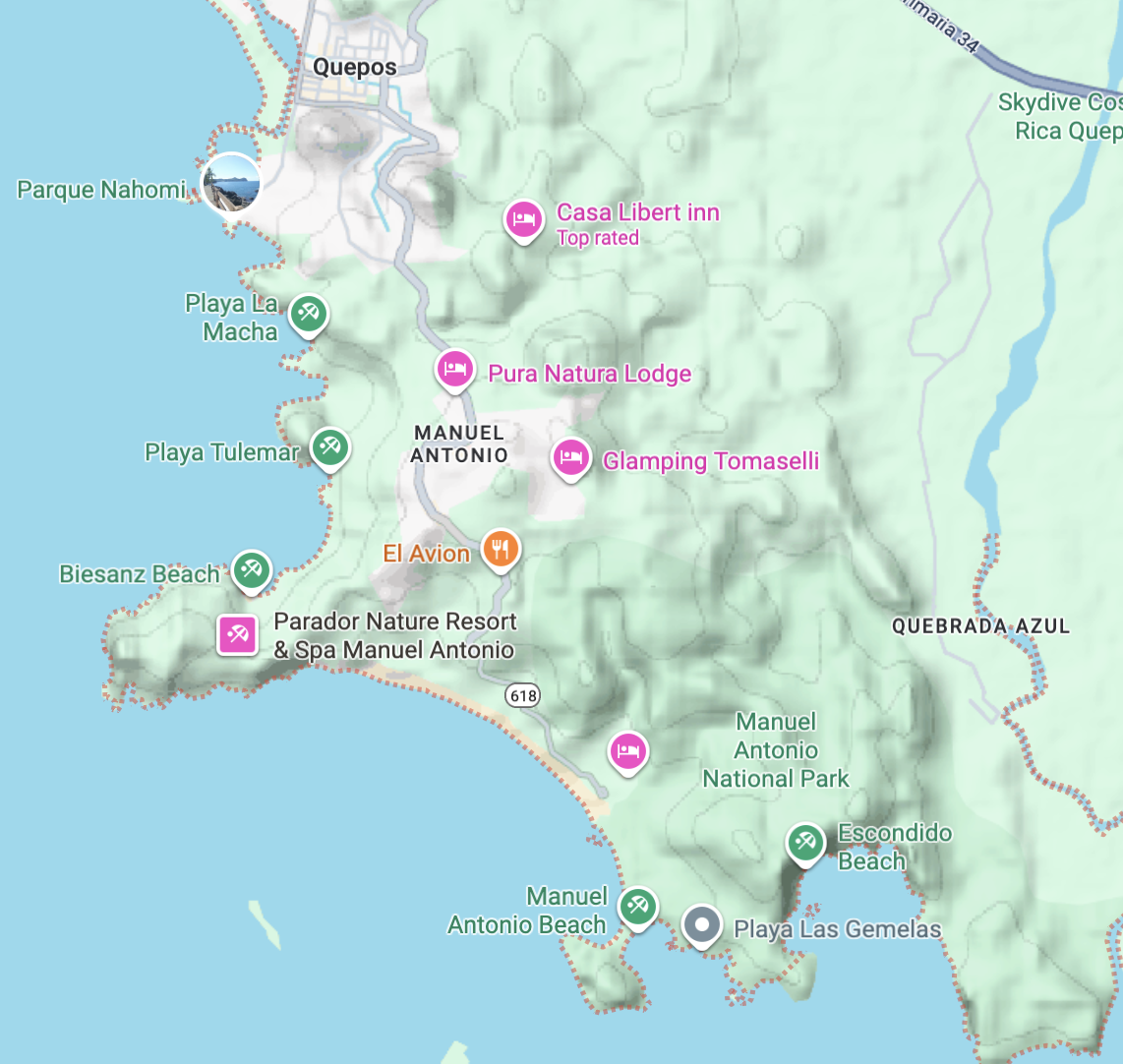
Drive 35 minutes up the coast highway, and then perhaps another 15 minutes on the gorgeous, windy road, and you’ll find yourself at Parque Nacional Manuel Antonio. This nature park is world renowned for its diversity of animals, insects and birds of Central and South America. Whether you’re wanting to spy a sloth, giggle at the playful monkeys or be astounded by the colorful birds and insects that populate the area, Manuel Antonio will not disappoint. We recommend talking to Stephen, they concierge at You Get Here to book a private guide for your group. You will be amazed. manuelantoniopark.net

Corcovado
Ranger Station
and Boat Ride
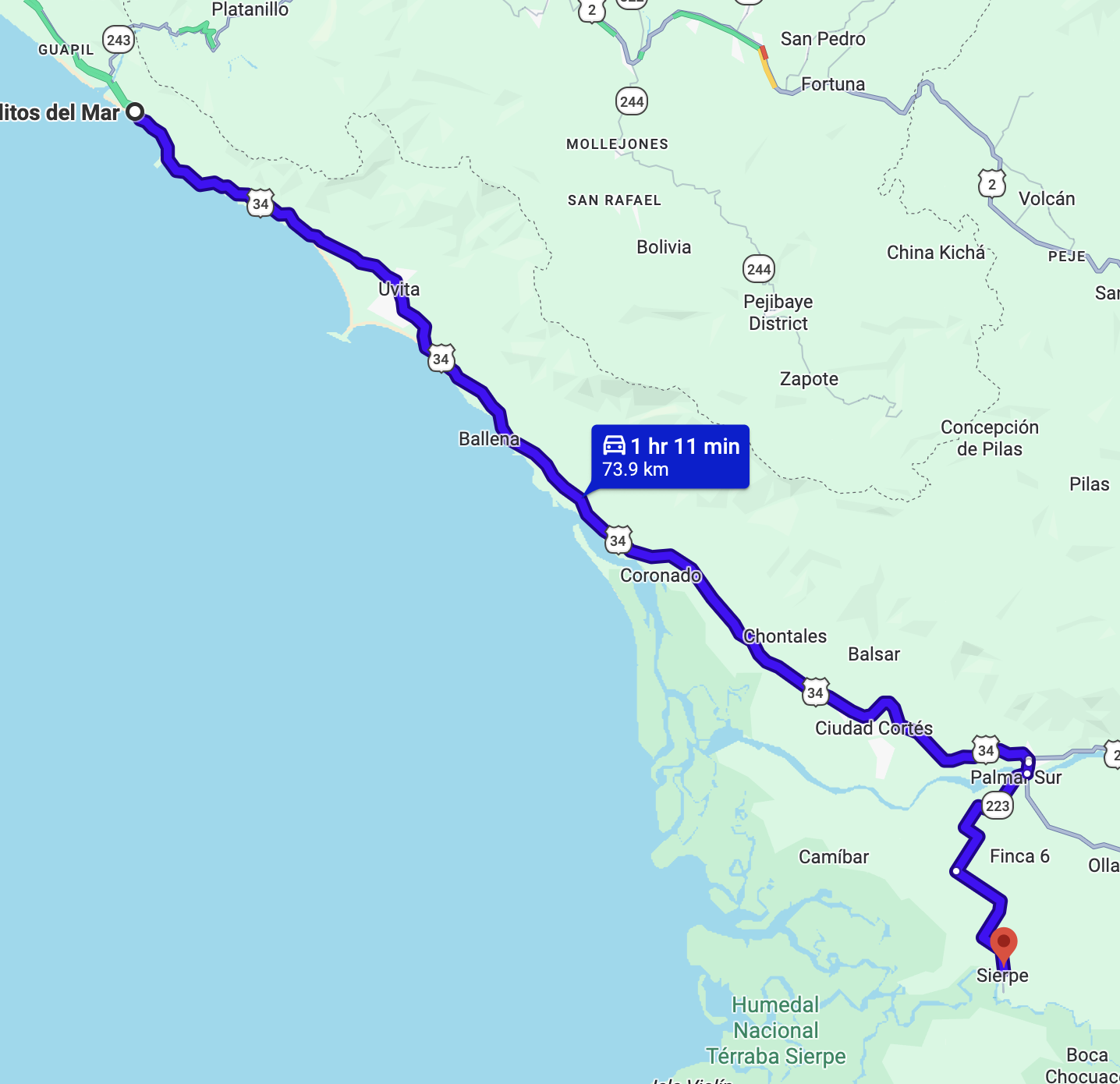
Corcovado Ranger Station is the closest point on the Osa Peninsula to our villas. The tour takes an entire day and consists of a drive to Sierpe, about an hour south, and then a boat ride out the Rio Sierpe, through the surf, and down the coast to the Corcovado Ranger Station. This is one of the most biodiverse areas in the world, and is a must for birders, monkey seekers, and naturalists of all types. Breakfast and lunch are provided, plus transportation and the boat ride. About $160 per adult, $100 per child, inclusive, for a 10 hour activity. Call YouGetHere for reservations.
Rio Sierpe Boat Ride Only
For a shorter boating experience, but with some great opportunities to see sloths, monkeys, bats (asleep), crocodiles, birds, and a variety of other wildlife, consider just the boat ride portion of the Corcovado trip. You’ll be with a very sharp-eyed guide who will navigate a panga through the narrow passages of the Rio Sierpe. The tour takes 2-3 hours, and it is suitable for kids as well as adults. Prices vary, but plan on $30-$40 apiece.
This map shows the road distance to the town of Sierpe, which is kind of in the middle of nowhere, yet it’s the start of most voyages to the Osa Peninsula.
pavones
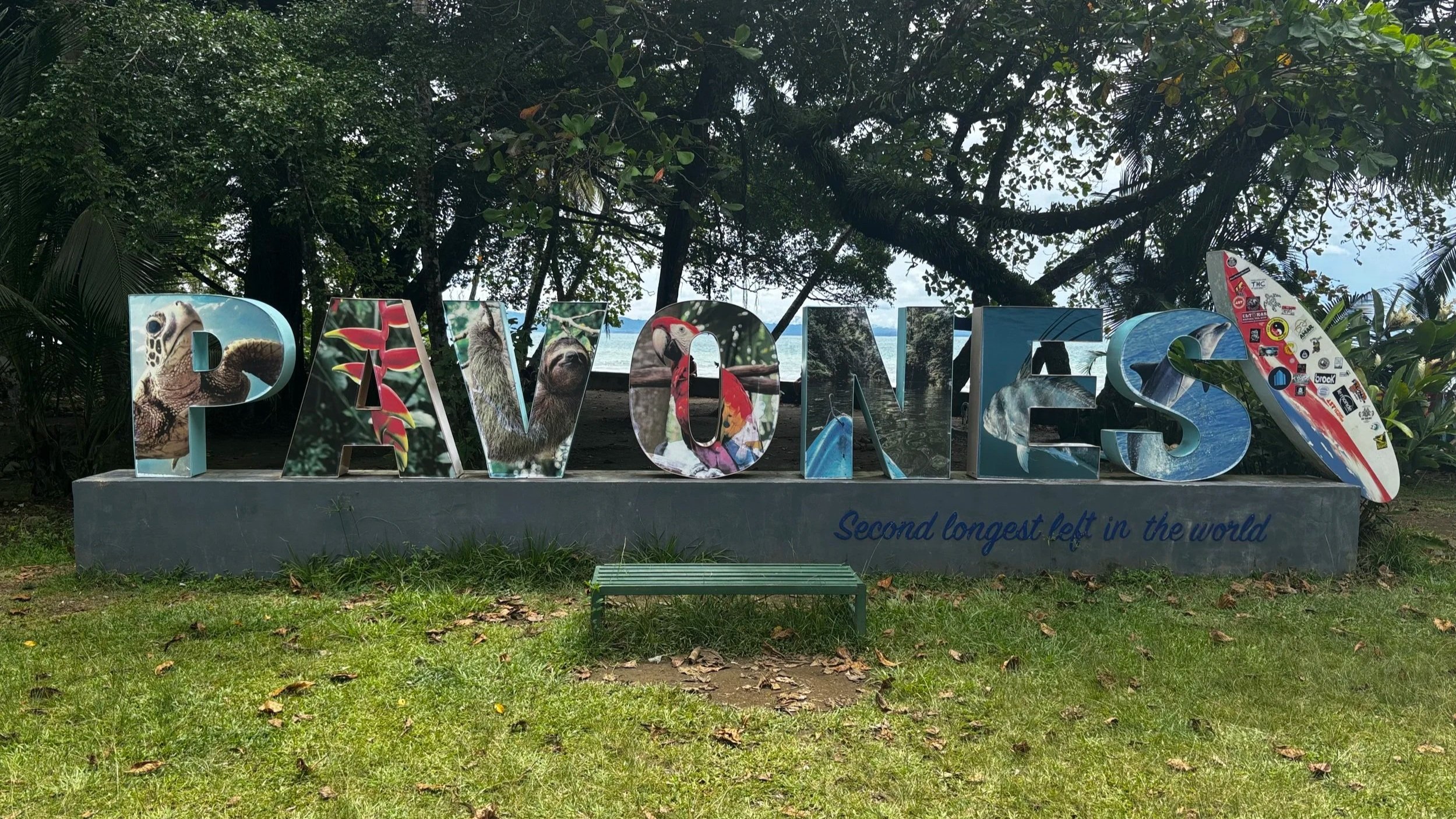
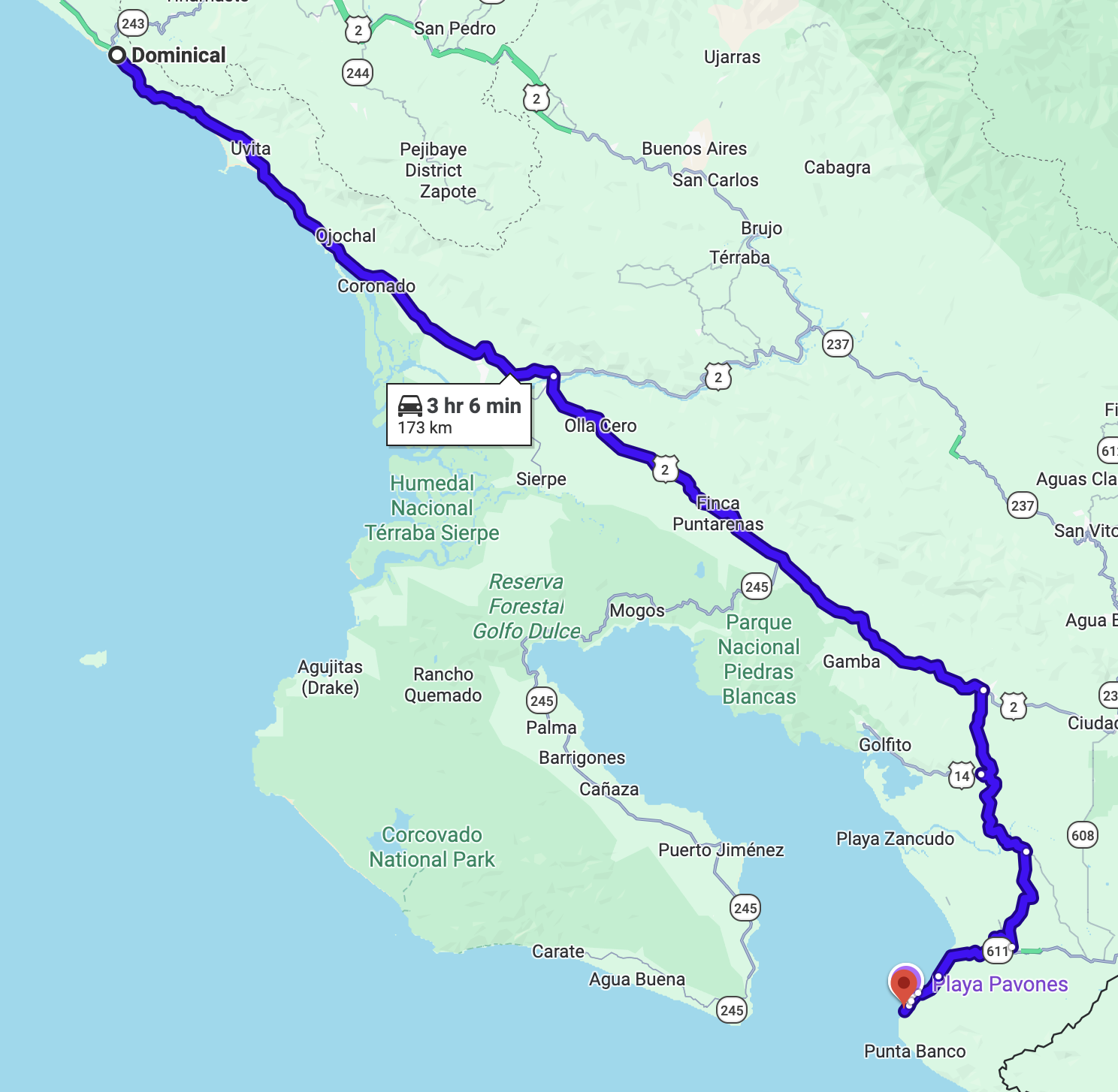
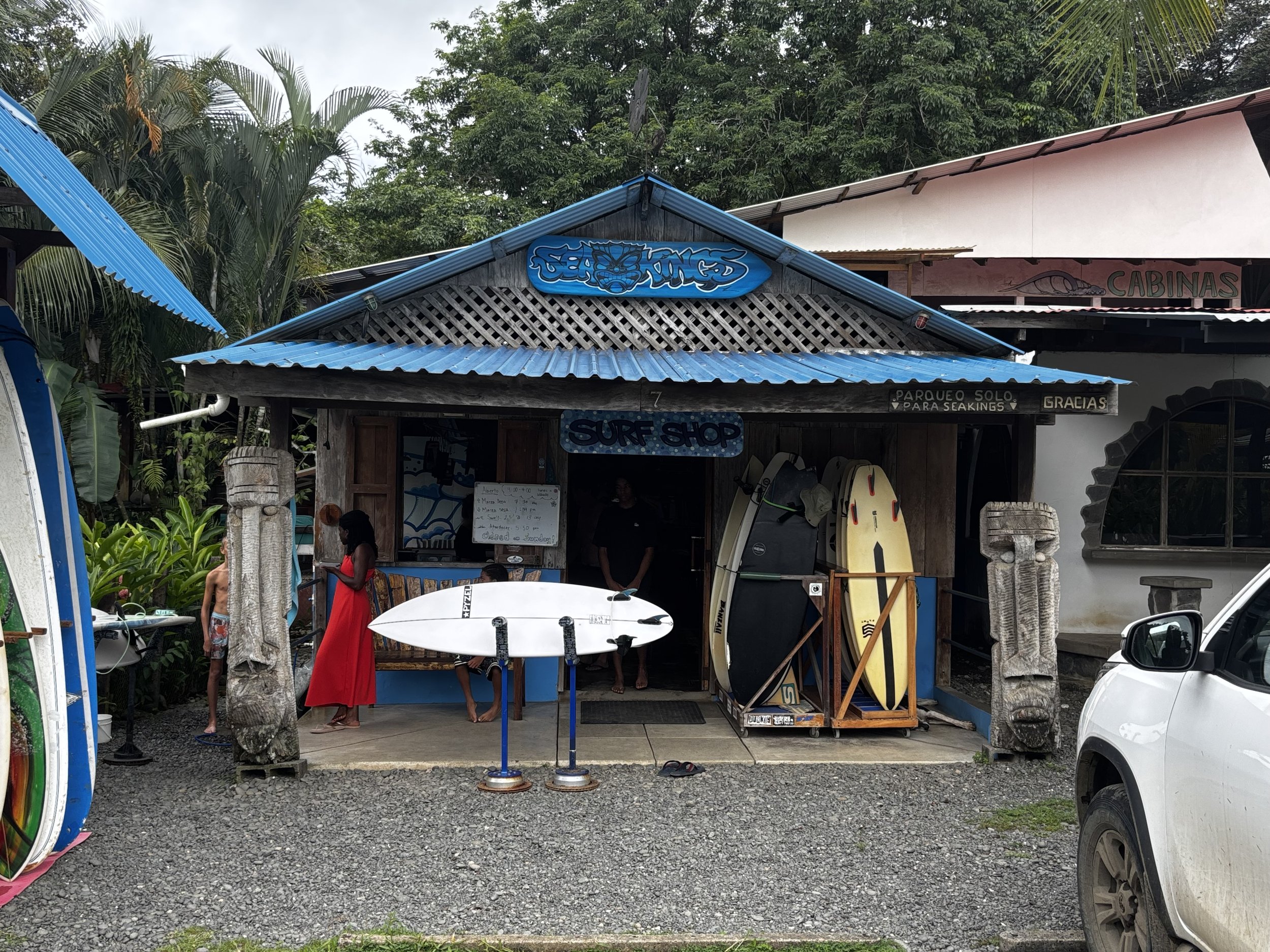
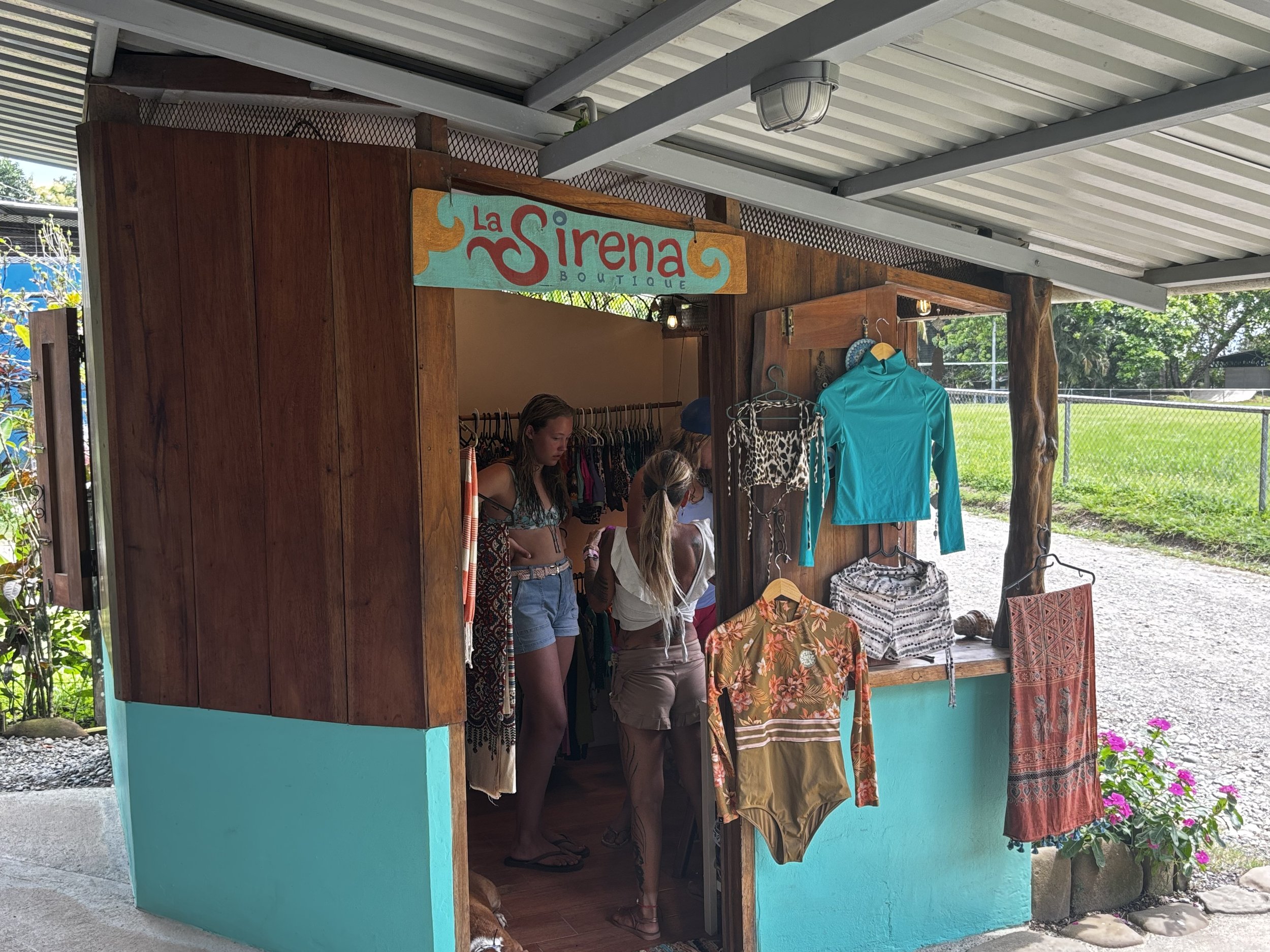
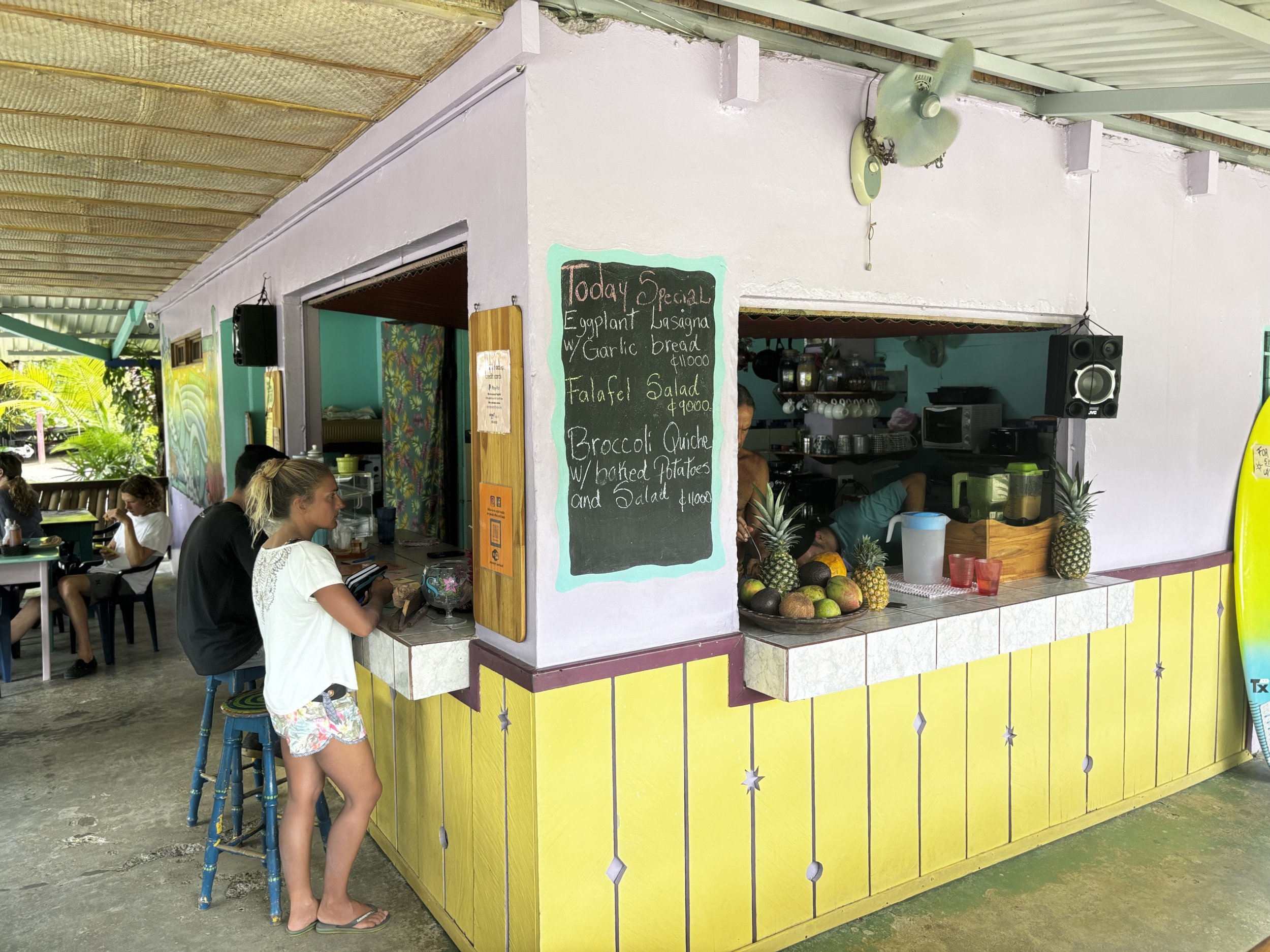
Arguably one of the most famous surf spots in Costa Rica, Pavones is known for having one of the longest left breaks anywhere. Not exactly easy to get to, or to find (we ended up in Panama one time, but that’s a story for a different time), it’s pretty much at the south end of Costa Rica. It’s a great day trip, especially when the surf is up. Otherwise, it’s a fun trip to a lovely tropical town.
From GEMINI:
The Wave: Rides at the main point break can stretch over a kilometer (and up to two minutes long) during a solid south-southwest swell.
Best Season: Peak surf season runs from April to November during the rainy season* when major southern hemisphere swells arrive. Milder, smaller waves happen during the dry months.
Seabed: Features a manageable, cobblestone rock bottom rather than a sharp reef.
Vibe: Retains an off-the-grid, laid-back pura vida atmosphere compared to heavily commercialized tourist hubs.
*This may be the best reason to come to Costa Rica during the rainy season. Just sayin’.
Day Trip to San Vito
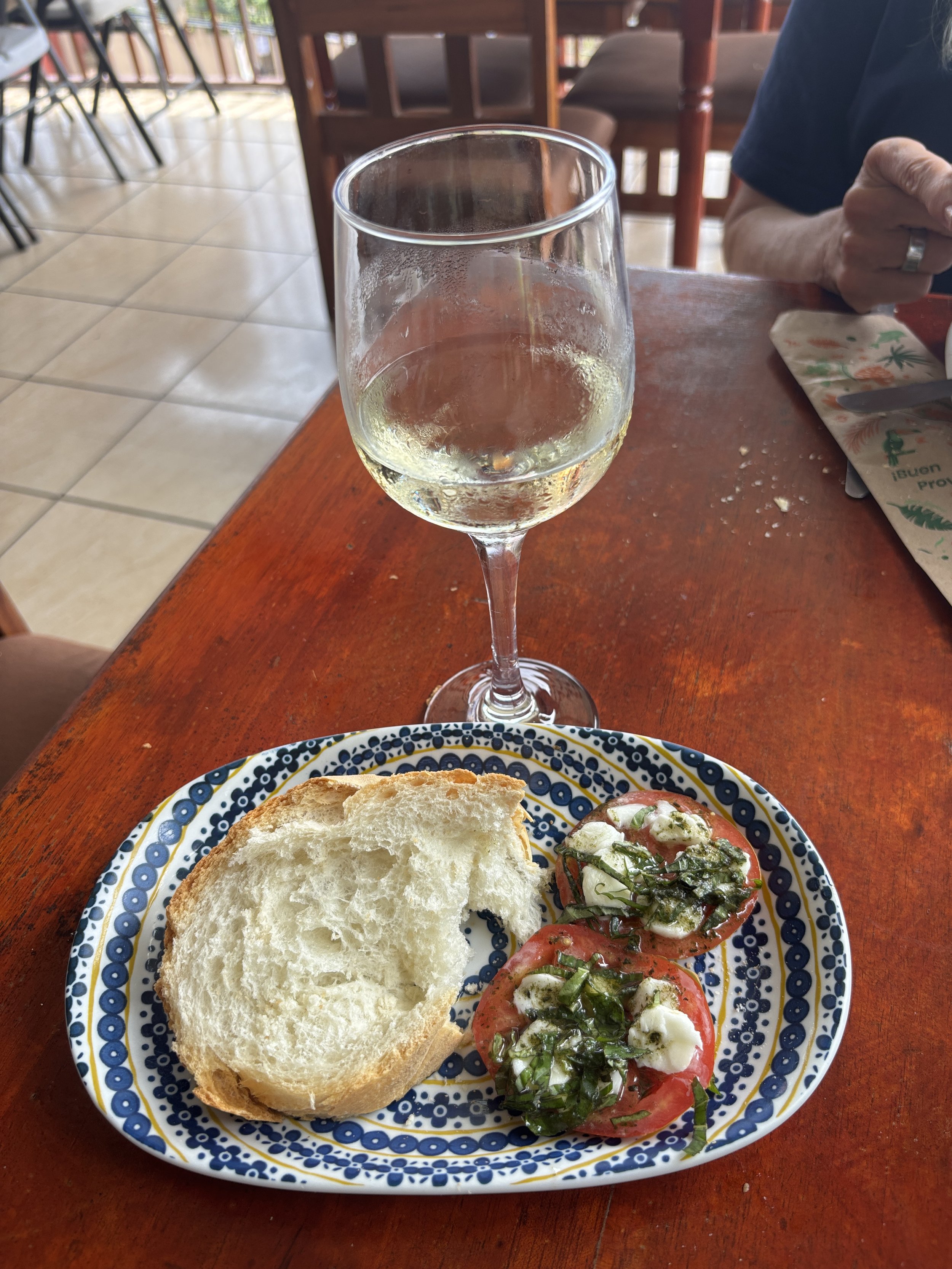
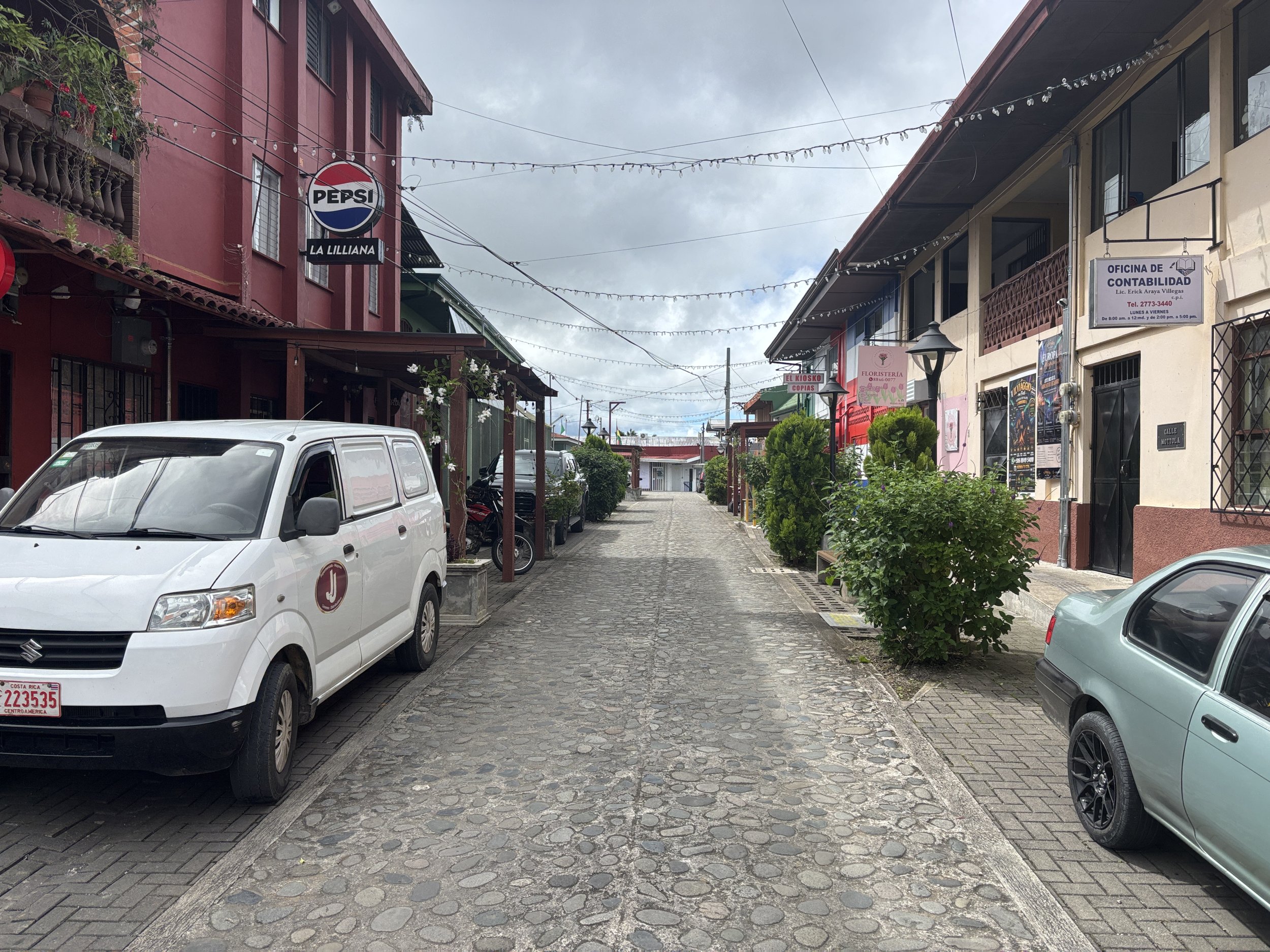
For years, we’ve wanted to visit San Vito, a unique community in a beautiful area south of our villas. Briefly, San Vito was founded around 1950 by Italians wanting to move from Europe to Costa Rica. Their influence in architecture, language, cuisine, and general “feel” is still present today, three quarters of a century later. More information can be found here.
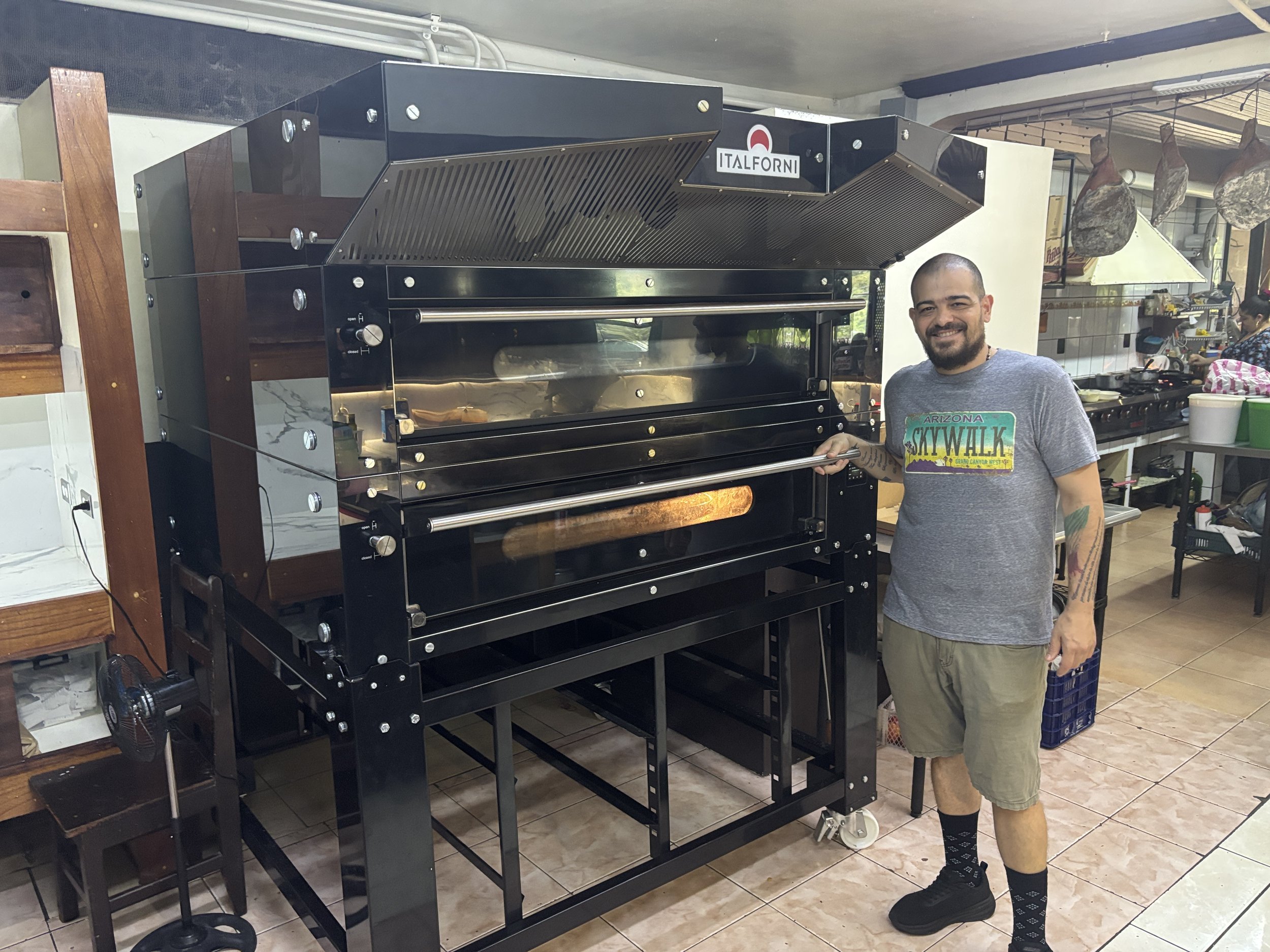
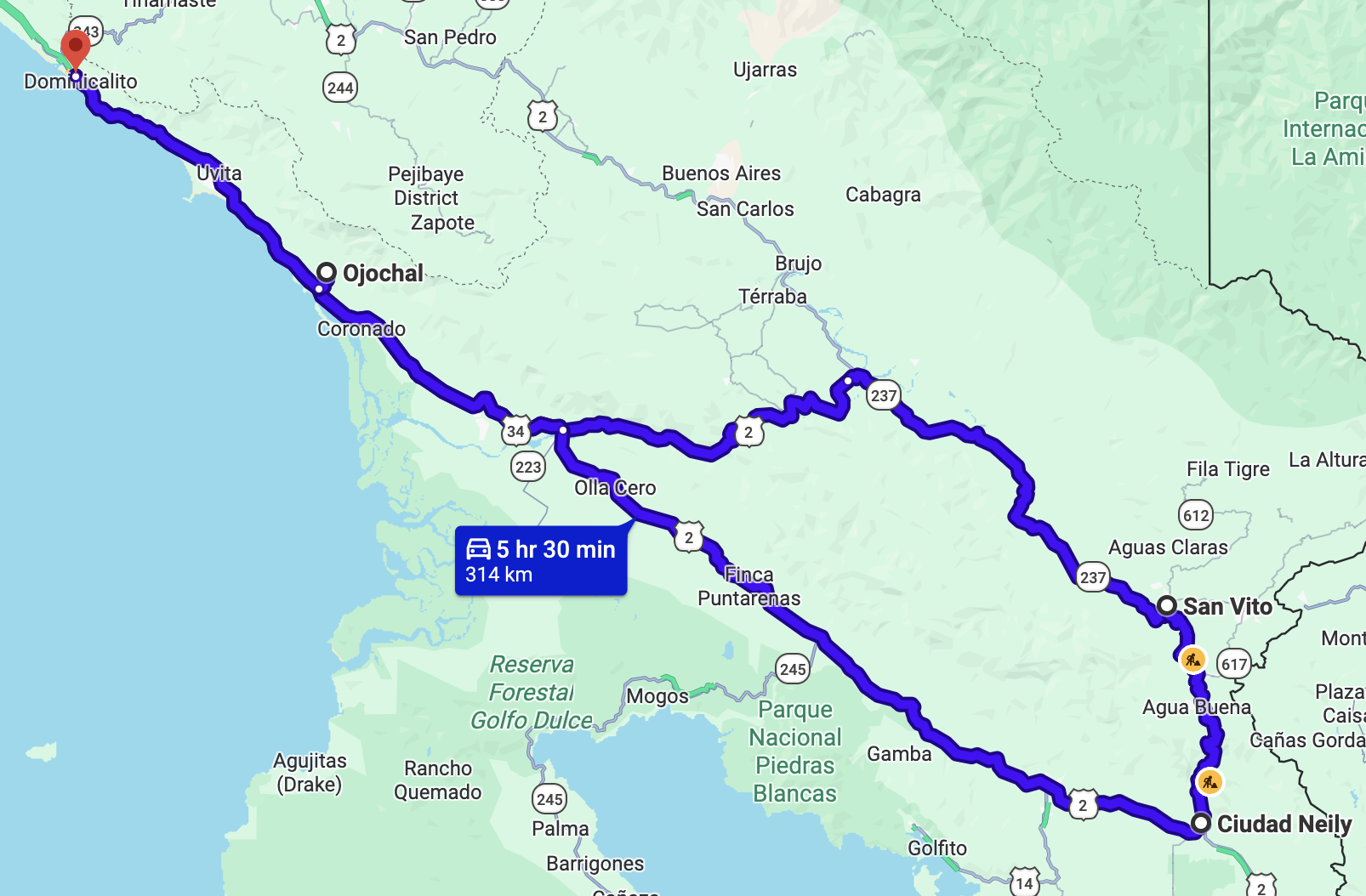
The total driving time from Dominical is about 5 to 5 ½ hours. We left our villa at 9:45 and arrived in San Vito just before noon, which was great timing as we had a wonderful Italian lunch at La Lillana. Start by driving south on the Costanera towards Panama and turn inland (left) at Palmar Sur. Follow the Rio Grande de Terraba upstream for about 30 minutes and turn when you see the sign to San Vito (it’s the first bridge that you’ll have seen since Palmar Norte.) Drive on the gorgeous winding Highway 237 to San Vito.
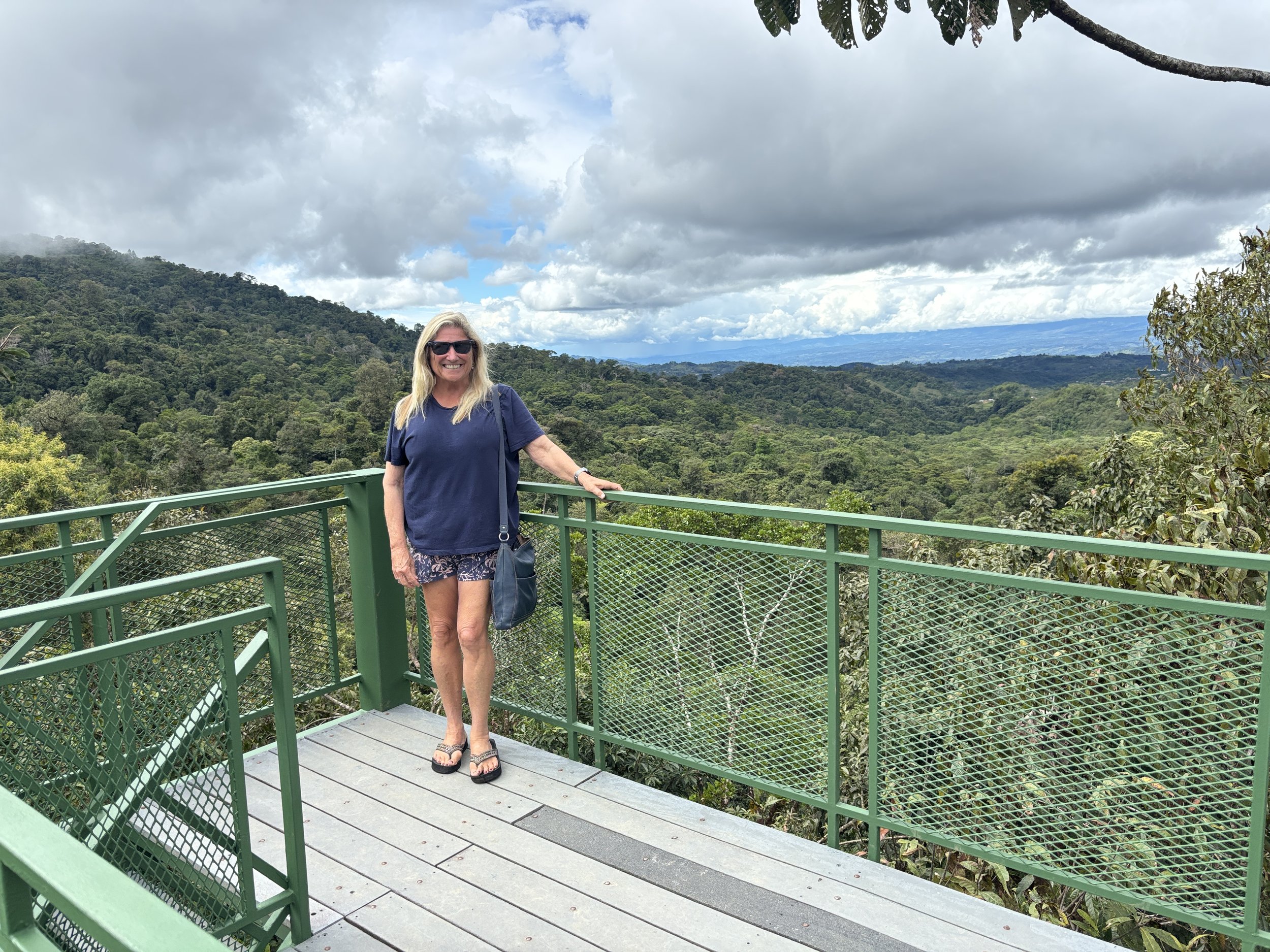
So, Venice it’s not. While there are signs of Italian culture, San Vito is pretty much like a normal Costa Rican town, clinging to rugged mountains and having the same hustle and bustle as, say, Uvita. We did have a great meal, but decided to go to the highly acclaimed Wilson Botanical Gardens about 10 minutes from San Vito, and on the way to Ciudad Neily. The botanical gardens are lovely, inexpensive ($10 per person) and have something like 1,000 species of tropical vegetation. A 15m tall observation tower allows you to get above the tree canopies for views of the surrounding land. You can see a lot in an hour before heading off on the highway.
The descent into Ciudad Neily is dramatic, so we were probably lucky to have cloud cover and some rain. This road could be featured in “How Did They Built That?” on television. Precipitous, windy, with glorious vistas (on clear days), the road winds its way down to sea level over the course of 45 minutes.
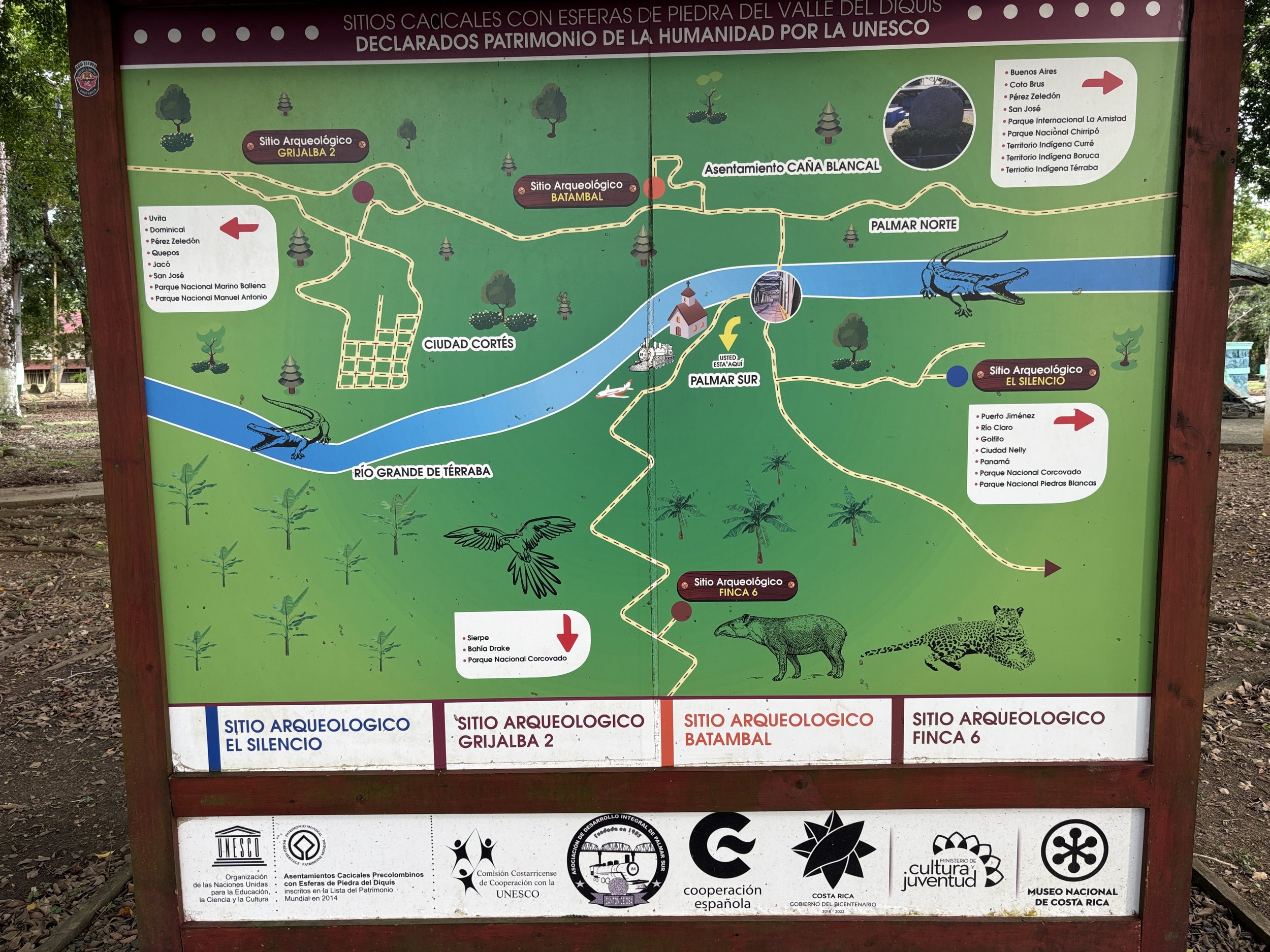
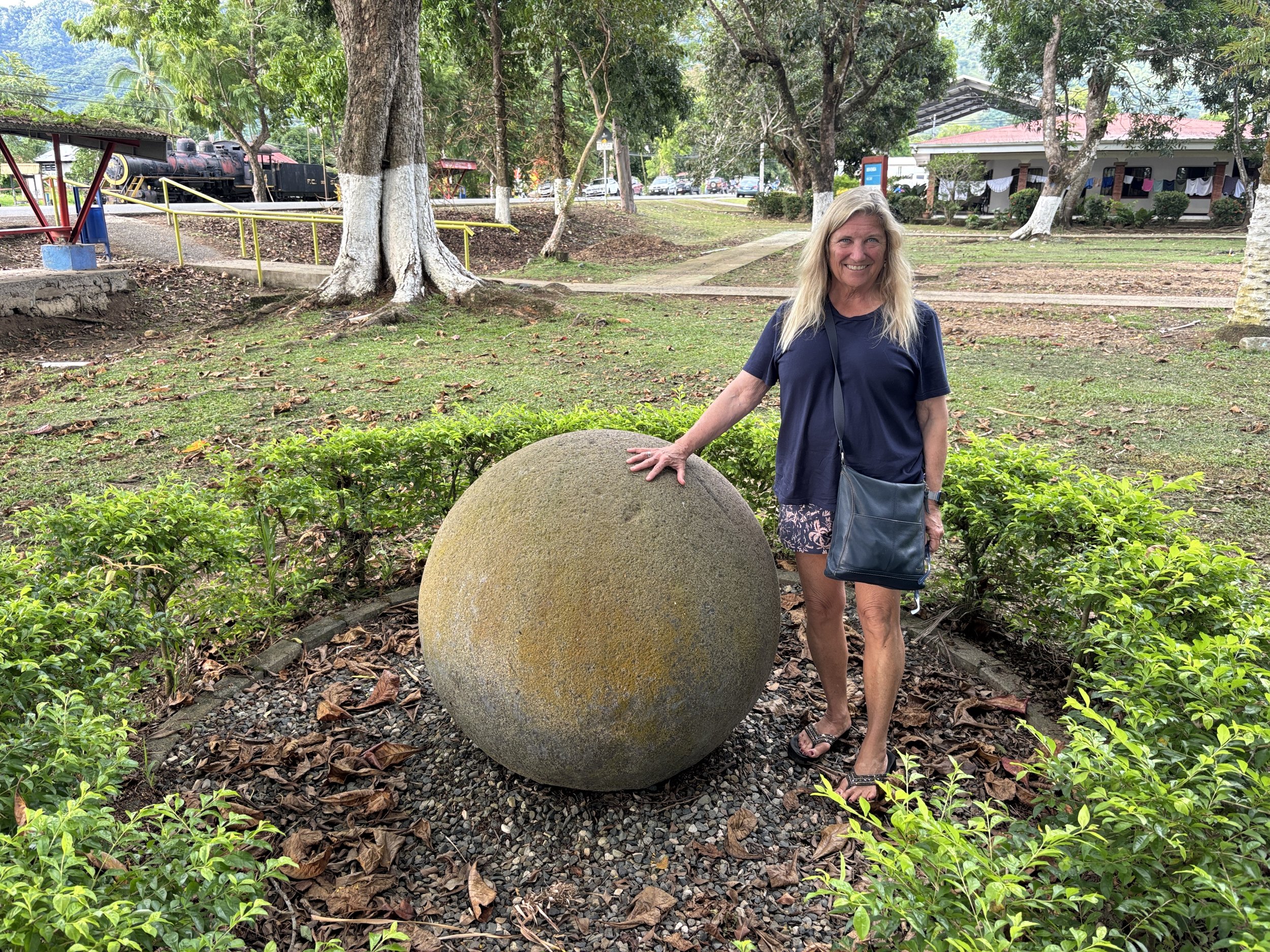
Ciudad Neily is one town north of the border with Panama, so you’re close to a number of locations that you might consider visiting, but my guess is that you’ll be longing for an uneventful trip back to Dominical. You’re back on Central America Highway 2, and headed north through a number of fincas (farms) and a drive of just over 2 hours to get “home”. However, you have one more stop on the way. Prior to crossing the bridge on the Rio Grande de Terraba, turn left off the highway to Palmar Sur and drive about ½ km. After you pass the locomotive on the right hand side, pull over on the left by the park with the giant trees and basketball court. There you’ll see about five of the famous Costa Rican stone spheres. These are the most accessible spheres in the area, although other archeological sites have more of them, as well as more explanation. If you have the time, consider driving to one of the locations, Finca 6, which is part of a Unesco World Heritage site.
One last suggestion: it’s now late in the afternoon, and you could use a cold drink and an excellent meal. Peel off the highway at Ojochal, and drive ½ km to the wonderful restaurants that are on the other side of the bridge: Citrus, Potz Bistro, Stan’s Cafe. Everyone in your group can find something delicious to eat, and non-drivers can enjoy an adult beverage or two before you drive the last 30 minutes to get home. The end of a perfect day!

Day Trip to San Isidro, the central valley, and Palmar Norte
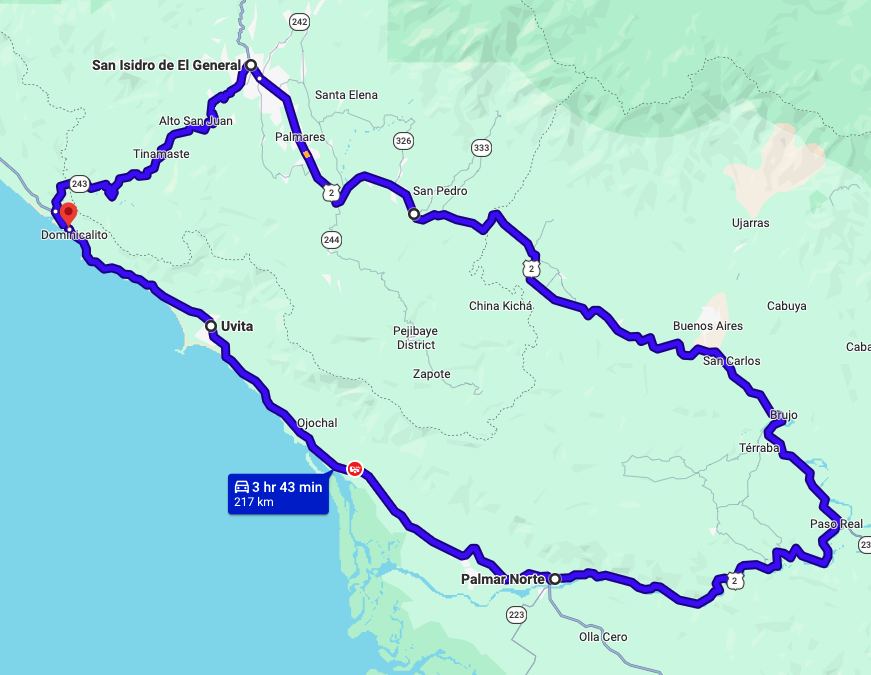
Sometimes you just want to see more of the countryside, and you don’t want to see the same places twice. This is a neat circuit that takes about 4 hours to complete, and much of it is in the central valley of the country.
Start by heading inland on Highway 243, which connects to La Costanera Highway 34 just north of the Rio Barú bridge. Drive up and over the coastal mountain range, and enjoy some gorgeous views of the Valle de General (the General Valley).
The highway passes through San Isidro de General, which is not exactly picturesque, so turn south on the Central American Highway 2, and head out of town. We’ve had good luck stopping at random roadside restaurants in all of Costa Rica, so if you’re hungry, feel free to do so. As the urbanization disappears, you’ll see a variety of crops under cultivation.
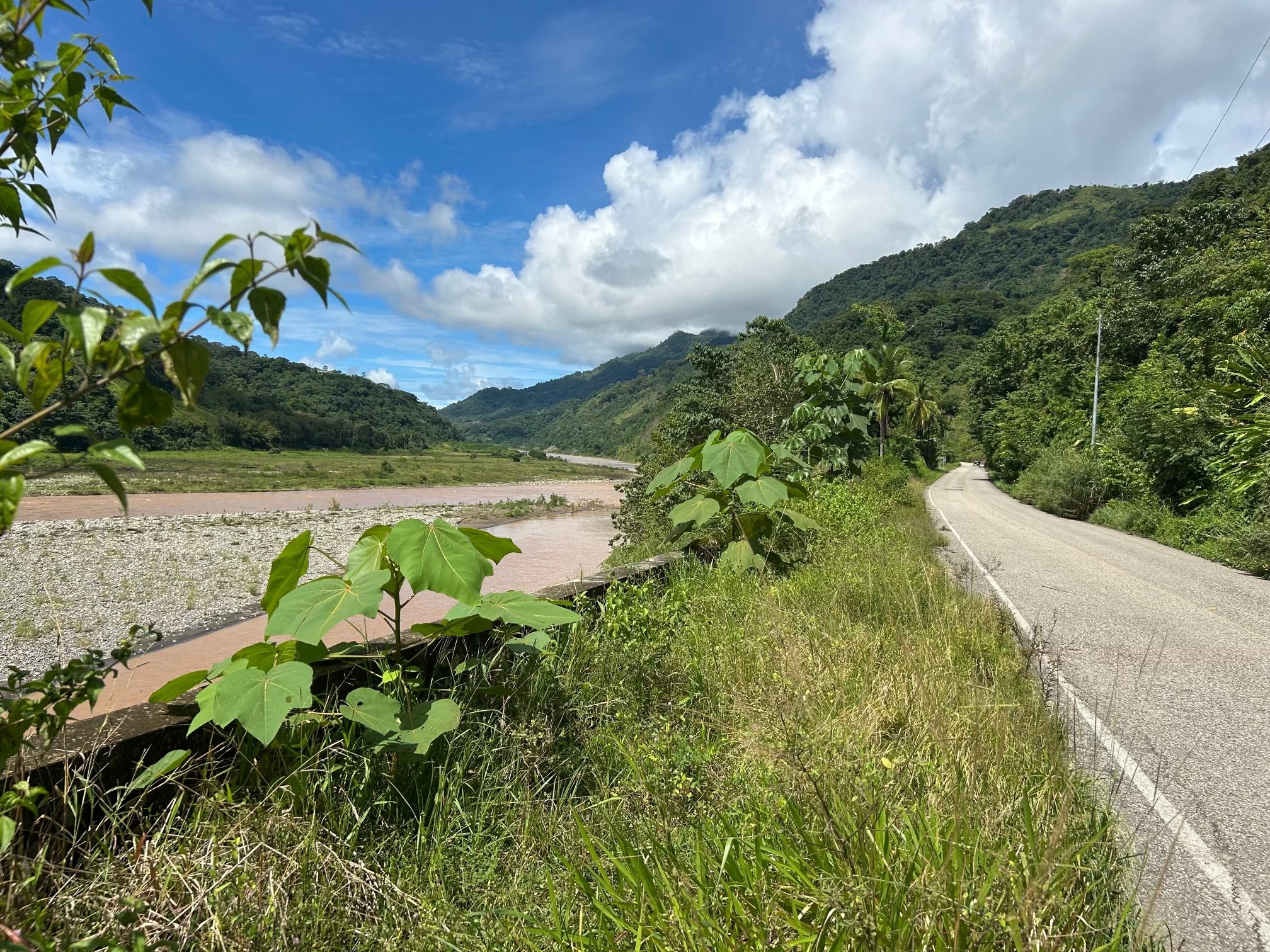
Soon the road goes over, and then follows, Rio General which eventually turns into Rio Terraba, the largest river in Costa Rica.
At Paso Real, there’s a turnoff on the left to a bridge at that crosses Rio Terraba and eventually leads to San Vito, covered elsewhere in this section.
Continue downstream, following the river on a winding picturesque highway. When you reach Palmar Norte, take a right and head back to Ojochal, Uvita, and Dominical.
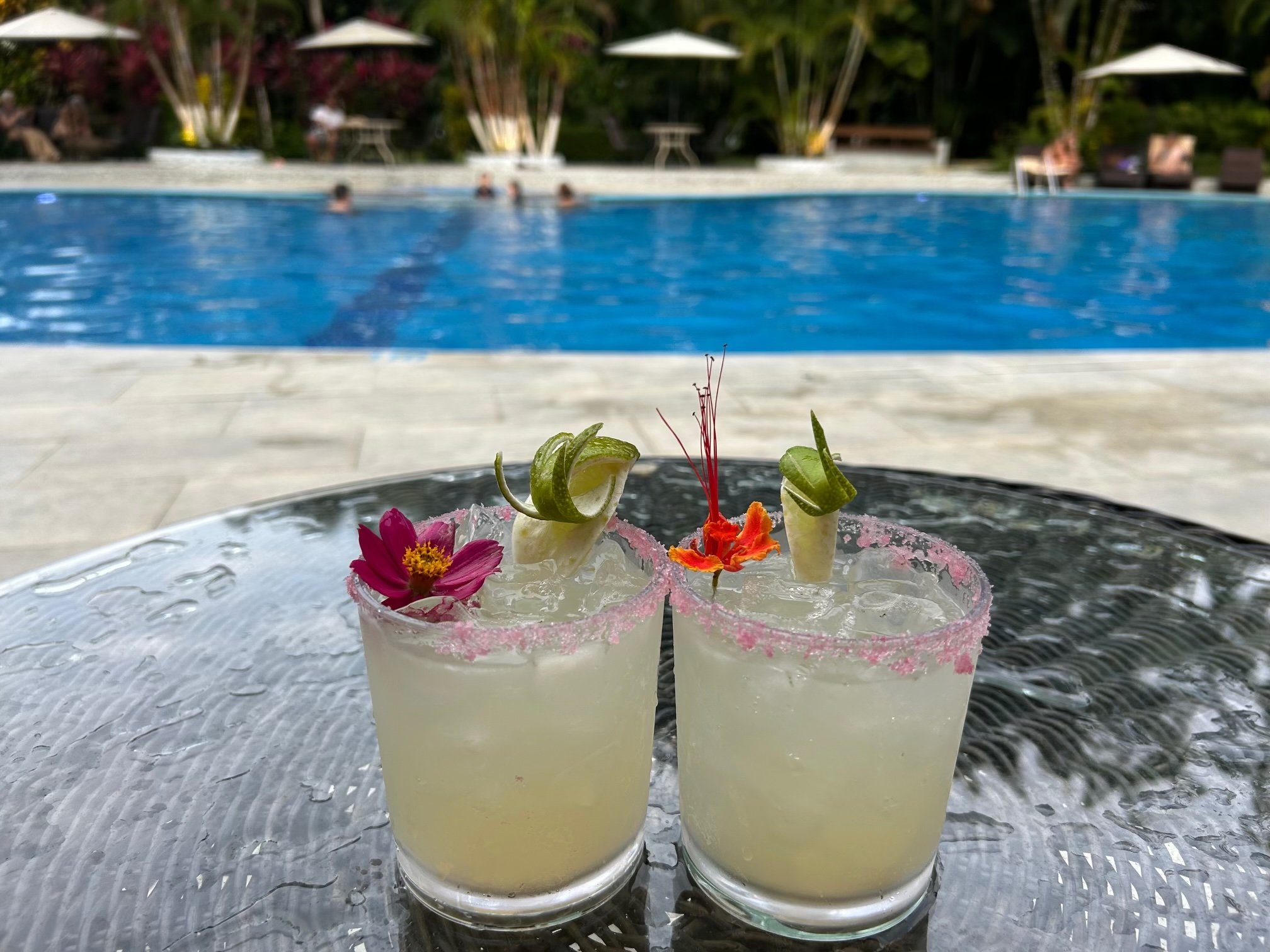
The drive is 217 km, about 4 hours, and is a good introduction to the southern part of the country. From that route, you can visit coffee plantations, the famous stone spheres, San Vito, Golfito, Puerto Jimenez, and Drake Bay, perhaps on a future expedition. For now, head to the Crocodile Cafe at Villas Rio Mar and have a margarita poolside. It’s a nice way to finish the day.
Rainmaker Park
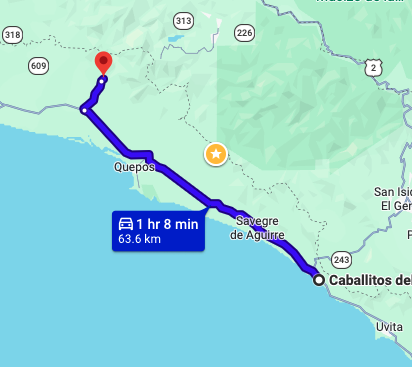
We had seen the signs along the highway for Rainmaker Park, which is about 10 minutes N of Quepos, so we thought we’d give it a try. Nestled in the coastal mountains, in a narrow canyon, the park consists of a 3km path through the rain forest, with numerous alternate routes if you don’t want to do the entire route.
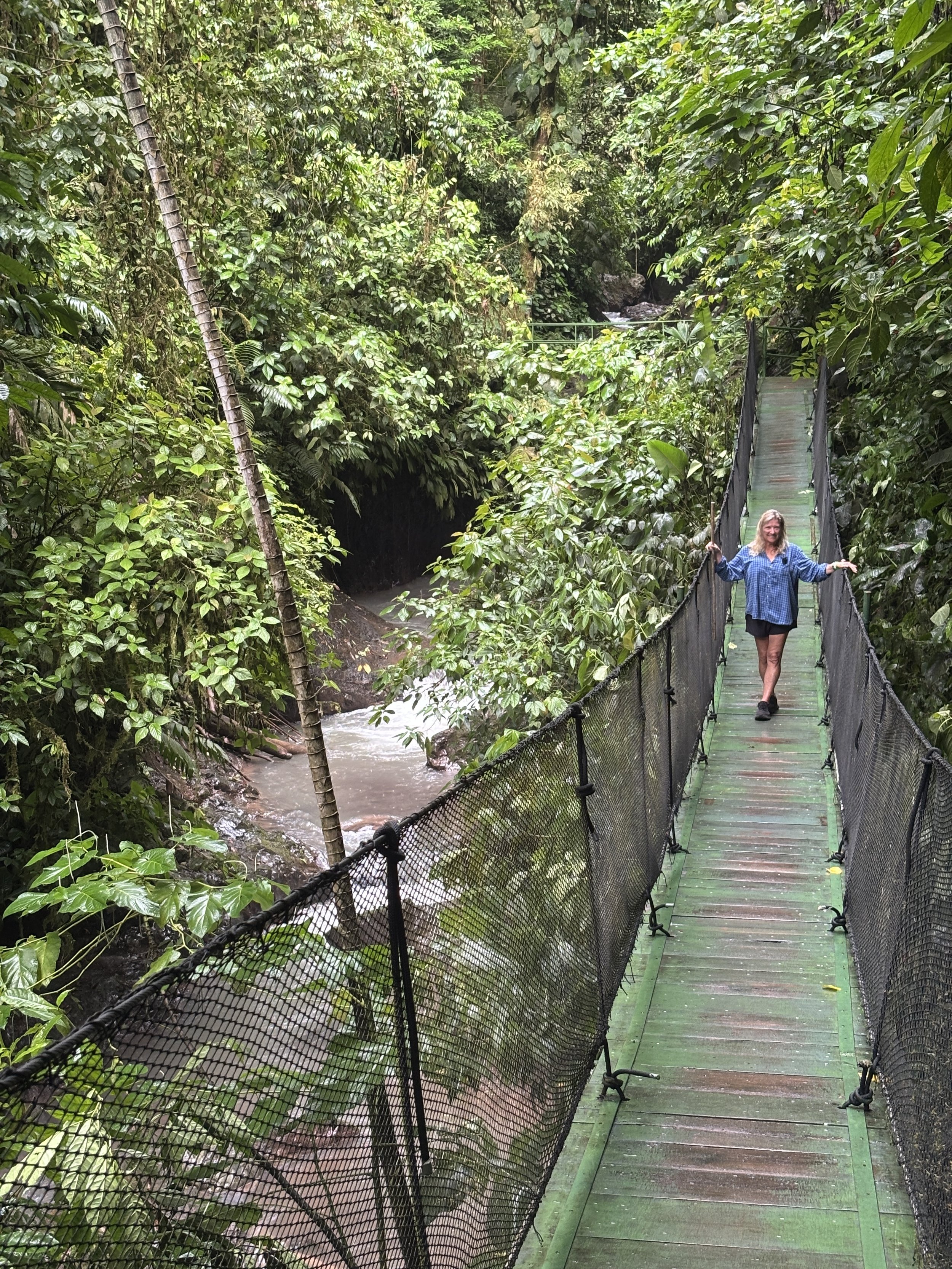
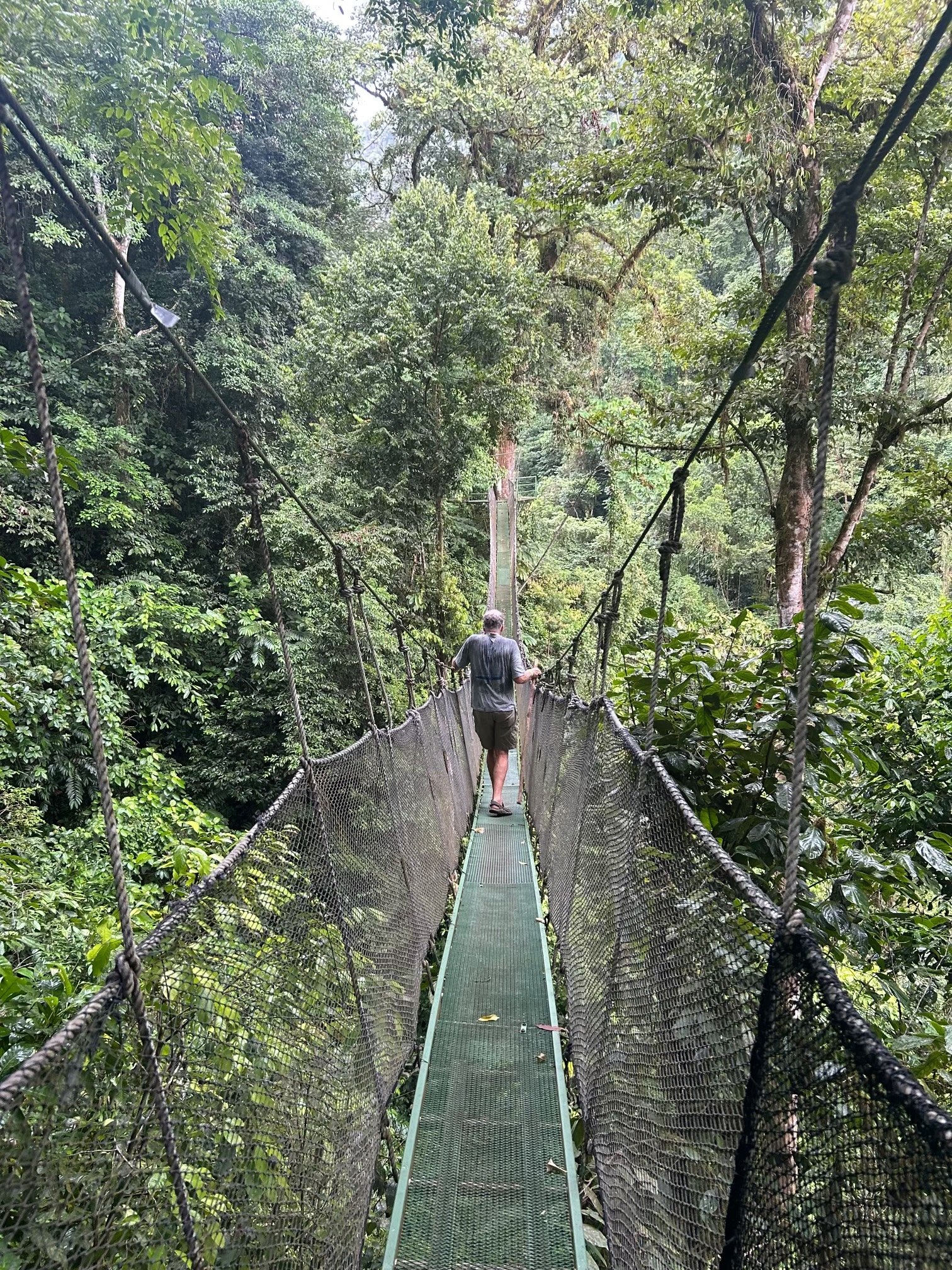
The real draw of Rainmaker, other than being immersed in the Costa Rican forest, is the large number of suspension bridges which crisscross the canyon. These are narrow, flexible bridges which are not for the acrophobic which give you the feeling of flying through the trees.
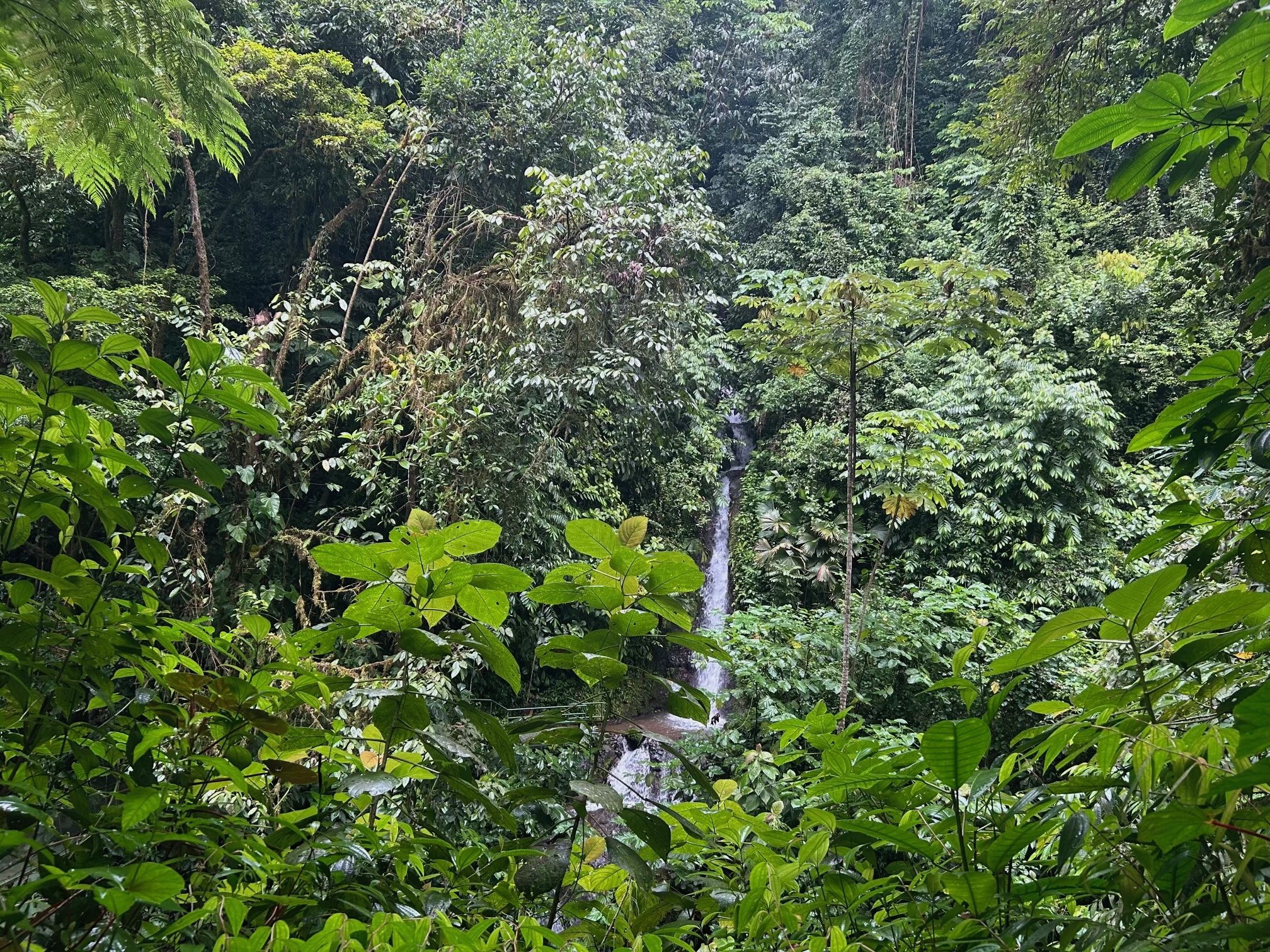
Waterfalls are the other reason to visit. Around every corner, it seems, is another cascade down the steep slopes. They combine to form a very pleasant, swimmable stream.
Unguided trips are around $30 per adult and take from 1.5-2.0 hours.
To get there, drive N on La Costanera, Highway 34, about 56 km from Caballitos. Pass through the small town of Pocares. As the highway veers left, take the road that leads into the palm oil trees on the right. Drive for about 7 km until you see an open building with a large green roof. One hour and ten minutes total.
The Villas
There are lots of lovely places to stay in Costa Rica, yet very few are on the beach, and have direct access to the ocean. When we found a piece of property nestled in the forest but very close to the beach, we bought it despite the many complications of owning* property in the “Maritime Zone.” Regardless, we’re delighted we did because the proximity to the beach is vital to making full use of the beauty of Costa Rica